Earthquake in Myanmar

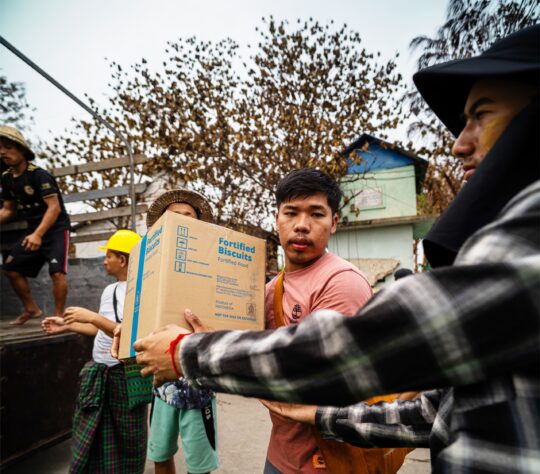
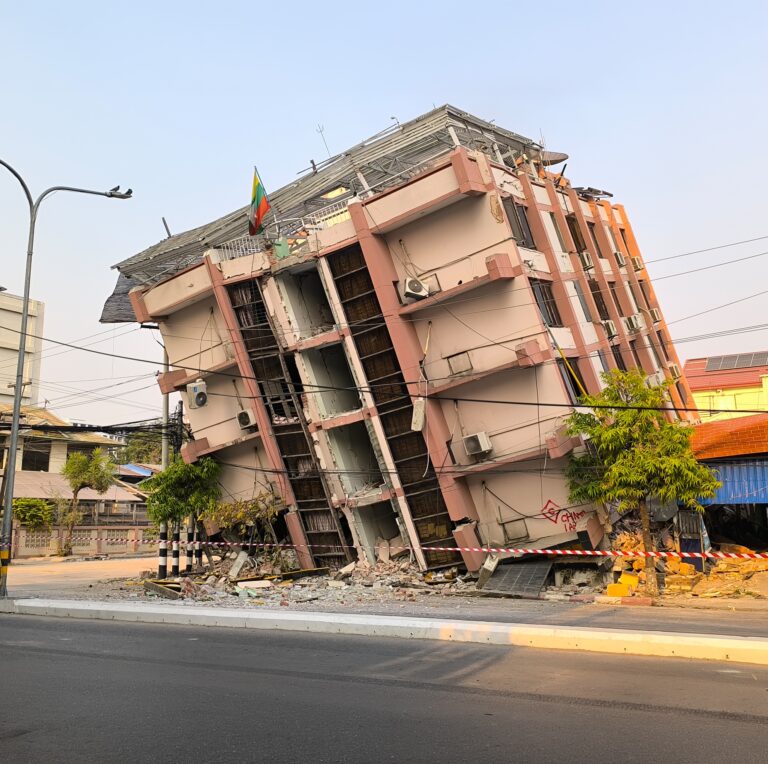
In March 2025, Myanmar was shaken by a strong earthquake. Enormous damage was caused. Nine million people live in the worst-affected areas. ena's international partners are on the ground providing emergency aid. Thank you for all the donations that have already been received for the earthquake victims in Myanmar.
Donate now for earthquake relief

CHF

Earthquake

The disaster has exacerbated the plight of the population.

On March 28, 2025, Myanmar was shaken by a devastating earthquake near Mandalay with a magnitude of 7.7 on the Richter scale. Although tremors had already been felt in the south of the country a few weeks earlier, this earthquake came unexpectedly and caught people completely unprepared. The strong earthquake caused severe destruction and further exacerbated the plight of the population in Myanmar. A brutal civil war has been raging in the country for years. Before the earthquake, it was estimated that almost a third of Myanmar's population (15.2 million people) would be affected by acute food insecurity in 2025. 

The need in Mandalay and Sagaing is overwhelming. Many people are still sleeping outside because they are afraid to return to their damaged homes. Many have lost their belongings and are without food. The region urgently needs emergency aid to meet basic needs such as shelter, food and water


This is what affected families experience:

The touching story of Ma Kay Thi Naing

This film was produced by our partner organization ZOA, which works directly on the ground. As a housewife and mother of three sons, Ma Kay Thi Naing has been struggling to survive every day since the devastating earthquake. Her family is still living in temporary accommodation. But thanks to financial support, she is able to regain hope. She can provide her children with food and give her son, who has a disability, the medicine he needs. Every bit of help makes a difference.

Measures

Safety and essentials.

With our locally based partner organization ZOA, we have immediate access to a well-established network. This allows our aid to reach places that are not accessible to foreign organizations. Together, we support people in need with improved access to clean water and urgently needed goods such as food. We adapt the measures to the current needs and resources on the ground.
  • 1

    Emergency aid

    Food security through food aid.

    40,987 people received food aid, including 3,580 pregnant/nursing women and children under the age of five who received special nutritious food.

  • 2

    Emergency aid

    Funds for essentials.

    We support 16,783 particularly affected families with funds so that they can purchase essential goods such as food, hygiene products and medicines independently. This aid gives people a degree of independence and dignity in the midst of the crisis. 

    Support for families is mainly distributed to women. Priority is given to the most vulnerable households with the highest needs. Post-distribution monitoring is carried out to monitor the use of the money, in which selected recipients are asked after each disbursement what they used the money for.

  • 3

    Emergency aid

    Access to drinking water.

    5,643 people received water bottles and water filters. The water filters enable families to convert available dirty water into clean water and ensure long-term access to clean water. Among other things, this reduces the outbreak of communicable diseases. In addition, most recipients initially received bottled drinking water to buy time.

  • 4

    Reconstruction

    Restoration of agricultural land and start-up aid.

    32 hectares of agricultural land were leveled with 9 tractors and restored for agricultural use. In addition, 143 farming families received start-up aid to buy seeds, fertilizer and tools to promote their long-term food security.

  • 5

    Reconstruction

    Repair work on destroyed houses.

    2,986 people are receiving materials and technical support to repair their homes. Many of the affected families are still living outside or in temporary solutions, as the safety risk in the damaged houses is too great. A repair budget of CHF 467 per household enables them to make their homes permanently habitable again.

Emergency aid

Your help makes a big difference.

CHF 70.-

supply a family with drinking water for a month, for example.

CHF 186.-

help a farming family, for example, with new seeds, fertilizer and tools.

CHF 467.-

enable a family, for example, to make their house permanently habitable again with repair work.

News

New stories from Myanmar.

Ihre Spende für die Nothilfe Myanmar

Jetzt dringende Not lindern.

Quality and transparency

Our certificates oblige us to maintain high standards.

We carry out our global aid projects not only with great dedication but also with the highest standards of quality and transparency to ensure your donation has the greatest impact. This is confirmed by various certifications, and through the KoGe umbrella organization, ena is accredited with the Swiss Agency for Development and Cooperation (SDC).
Learn more
ZEWO logo (your donation in good hands)
Transparency

ZEWO seal of approval

The most established donation seal of approval in Switzerland guarantees that the use of donations at ena is transparent and effective.

learn more

sqs logo
Quality

ISO 9001:2015

The ISO 9001:2015 certification attests that our aid organization complies with quality and organizational standards and is constantly developing these further.

learn more

CHS logo
Responsibility

CHS Alliance

The CHS Alliance sets global standards for humanitarian aid and development cooperation and monitors compliance with these standards. ena's CHS certification confirms the quality and accountability of our work.

learn more

Relevance

SDC

Our long-standing cooperation with the Swiss Agency for Development and Cooperation (SDC) as part of the umbrella organization KoGe ensures that we are a professional partner.

learn more