Hope That Endures: Two Inspiring Stories

In Uganda, many young people are forced to take on responsibility for themselves and their families at an early age. Those who have to drop out of school usually have little chance of escaping poverty. But with a little courage, things can change—as the stories of Violet and Deborah show.
Step by Step Toward Self-Employment with Violet
After dropping out of school, Violet was given the opportunity to train as a hairdresser and makeup artist. With the startup capital we provided, she opened her own studio and invested in rent, braiding supplies, and equipment. Today, she successfully runs a salon and a makeup shop, trains interns, and uses her income to support her visually impaired father and her sister’s training as a seamstress.
When we met Violet in 2024, she had a clear goal:
I want to expand, open new locations, and provide even more young people with training opportunities. (Violet)
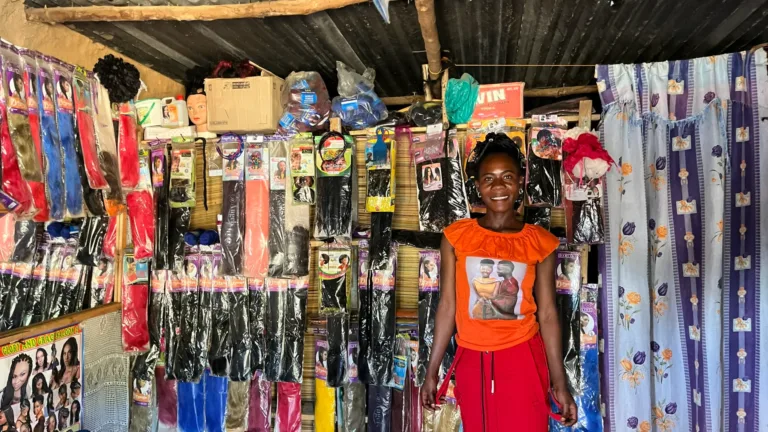
A year later, she proudly reports on her progress. Her business is growing, and two interns are learning the trade from her. Despite fierce competition in the beauty industry, Violet is steadily gaining new clients. Her clients appreciate the trusting relationship she builds with them, return regularly, and recommend her to others.
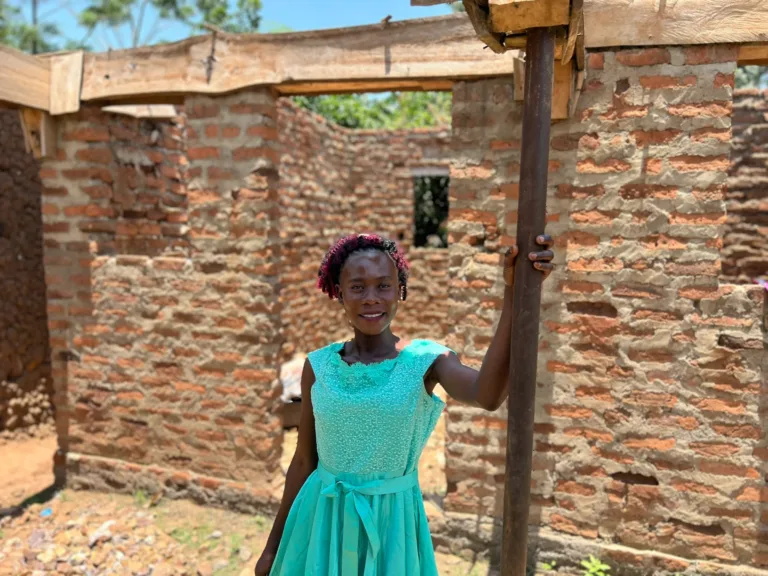
Her personal life has also changed significantly. She is building her own house and providing financial support to her father. He was on the verge of going completely blind. Thanks to the treatment she was now able to afford, that didn’t happen.
When my father fell ill, my family almost lost all hope. Participating in the project changed my life and that of my family. The combination of training and startup capital was crucial. Today, we can hope again. (Violet)
This is how Deborah finds her own way
Deborah’s story also illustrates the impact that vocational training projects can have. She dropped out of school and spent seven years doing housework and helping out on her family’s small farm. With few prospects ahead of her, she even considered getting married at a young age.
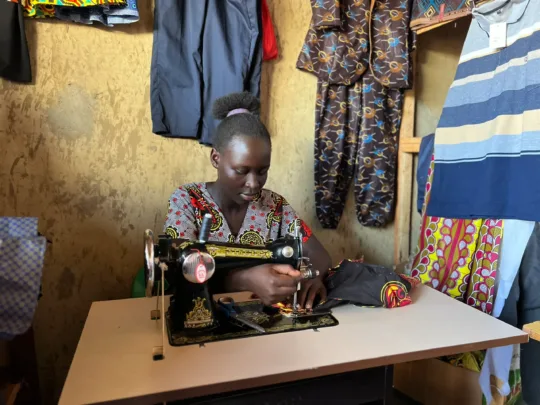
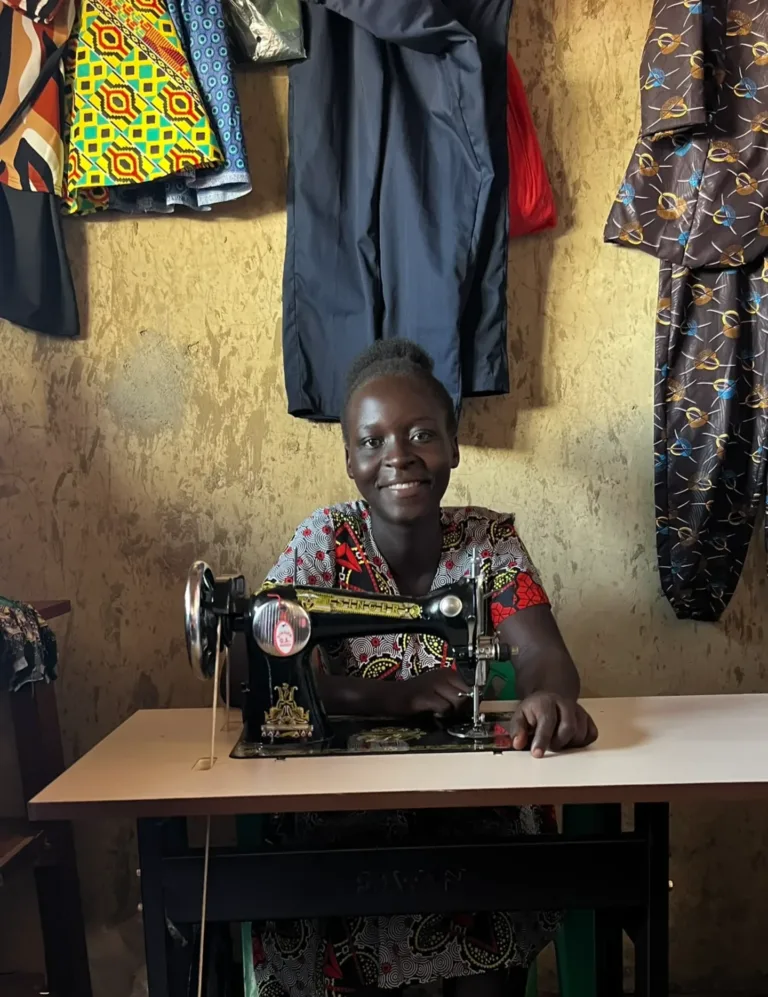
In 2024, Deborah began a six-month apprenticeship in tailoring. She successfully completed the program in November, did an internship, and was subsequently hired full-time at a sewing workshop. Using the sewing machine provided by CaRNaC, she now sews dresses, shirts, and pants—and earns enough to cover her basic needs.
The young woman’s goal is ambitious: to open her own studio and finance the education of her four younger siblings.
I used to be completely dependent on my parents. Now I have a skill that allows me to support myself. (Deborah)
Knowledge and initiative bring hope
When young people like Violet and Deborah gain access to vocational training, it transforms their entire family life. Violet’s father, who had once lost all hope, can see again thanks to her support. Deborah lives independently and thinks about the future of her siblings. Knowledge, initiative, and a little support open up new paths—and create lasting hope.
Background: Vocational Training in Uganda
With an average age of 17, Uganda has one of the youngest populations in the world. The Namayingo District in the southeast of the country has a population of around 215,000. People primarily make their living from agriculture and fishing. Since gold was discovered in 2000, small gold mines have sprung up along the shores of Lake Victoria—many children and adolescents work there under dangerous conditions. Over 40 percent of children are affected by child labor; 10 percent have never attended school.
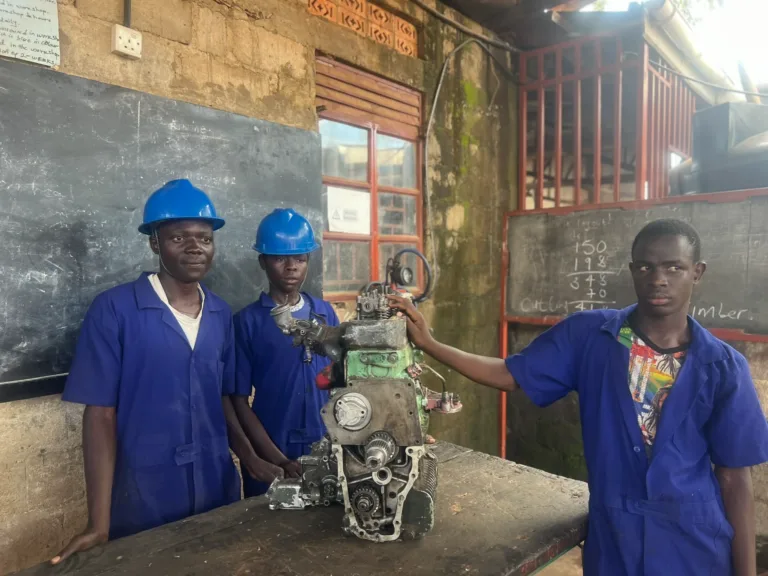
Since 2009, ena has been working with the local organization CaRNaC to provide opportunities for young people. Since a university education is often unaffordable, our programs offer practical vocational training lasting from three months to three years.
The focus is on practical skills, business knowledge, and financial independence. Upon completing their training, the young people receive a starter kit containing tools and materials to help them start their own business—and with great success: not a single graduate has resold their starter kit so far.


