Mona: "The war began on a Monday..."

Millions of people, including many children, have fled the civil war in Sudan – either within the country or to neighboring countries such as South Sudan. But they are not safe anywhere safe, because hunger andviolence do not stop at borders. In this blog article, you will get to know Mona. Her harrowing story is representative of many fates in Sudan and is a call to take notice. Together, we can help. Read more.
A voice that must be heard
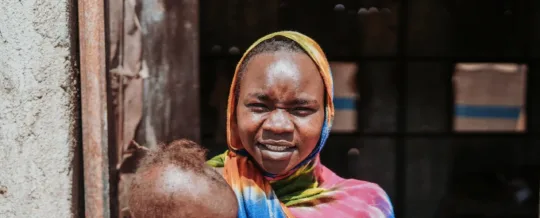
Mona is 31 years old and comes from the Darfur region, one of the most affected areas in the country. "The war started on a Monday," she recalls. She is the mother of seven children, her eldest of whom is already a mother herself. In her home country, many women marry at a very young age. Mona worked hard selling sorghum grain at the market. Her children were all in school. Her husband had just left for Gedaref (Sudan) when the violence began.
With the outbreak of war, Mona and her family began a desperate and dangerous escape. They sought refuge in various areas and tragically lost their six-year-old son, who drowned while trying to cross a river.
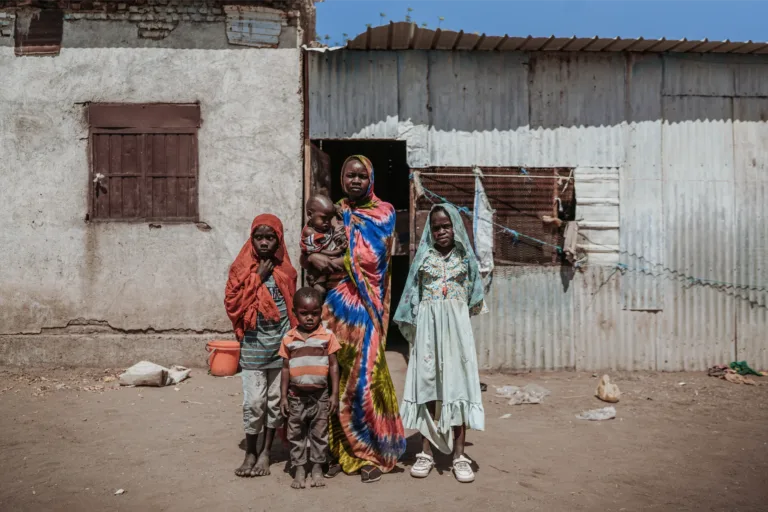
Later, the family was caught up with by the paramilitary group Rapid Support Forces (RSF). Men were brutally murdered, women raped. Mona herself and several of her children were seriously injured: her little son was thrown headfirst onto the ground and has been unable to walk ever since. Another son was tortured. Despite the unimaginable suffering, Mona and her children managed to escape. They crossed the desert for three months—without food, surviving on only a little water from puddles and leaves from trees.
After a long and exhausting escape, they reached the refugee camp in Gedaref on foot. Mona was barely recognizable—exhausted, covered in dust, her clothes torn. With the support of the camp staff, she found new strength. She has not yet found her husband, but she has never lost her dignity and courage.
The world must know what is happening here.
"The world must know what is happening here,"she says. Mona tells her story so that the suffering in Sudan is not overlooked.
What is happening in Sudan?
Sudan has been embroiled in civil war since the split of the military regime in April 2023. The Sudanese Armed Forces (SAF) are fighting against the paramilitary group Rapid Support Forces (RSF). The original plan was to transfer power from the military to a civilian government and integrate the RSF into the army. However, the power struggle between the leaders of the SAF and the RSF and the failure to reach political compromises made this process impossible. The conflict escalated.
The army controls most of the eastern, northern, and central regions of Sudan, while the RSF has gained the upper hand in the west, particularly in Darfur. Both sides in the conflict are accused of war crimes. Hunger is being used as a weapon, and even in refugee camps, assaults and violence are commonplace. Food is extremely scarce there—often, there is a shortage of everything.
Helping sustainably with ena
The humanitarian crisis affects not only Sudan itself, but also neighboring South Sudan. The influx of refugees is overwhelming the already weak infrastructure there and posing major problems for the host communities.
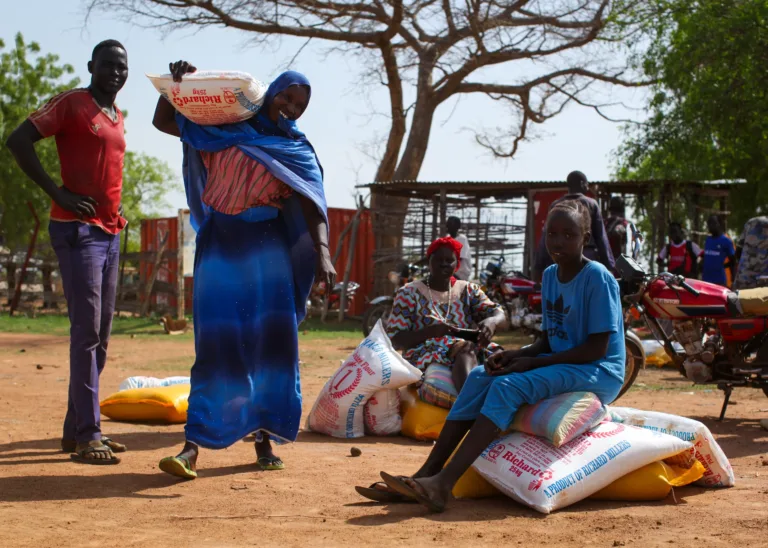
Together with its partner organization ZOA, Ena supports families in displacement camps in Aweil, on the border between Sudan and South Sudan. Our emergency aid ensures the survival of many people, but it also has a long-term impact:
- Agricultural support: In Aweil, 600 households have already been provided with seeds and tools for growing staple foods. Around 300 people—mostly women—have already been trained in agriculture so that they can grow their own food and secure their nutrition in the long term. Another 300 are to follow by February 2026.
- Access to clean water: Five wells were renovated and four more were built. This gave a total of around 15,940 people access to clean drinking water.
- Strengthening the community: Nine water management committees were established and trained to manage the wells in the long term. In addition, nearly 12,000 people received training on hygiene issues.
Further activities—including repairing wells and distributing tools—are already being planned so that even more families can stand on their own two feet again.
Act now
Together, we can help and ensure that the people of Sudan and South Sudan are not forgotten. Mona represents countless others who struggle for survival every day. Her voice reminds us that looking away is not an option. By looking, understanding, and acting, we give back hope. Because humanity begins where we take responsibility together.