On a project trip with us: A morning in Zambia

In June 2025, Jean-Pierre Patzig, program manager at ena, was on the road in Zambia. During his trip, he attended training courses and events organized by the local partner organization Evangelical Fellowship of Zambia (EFZ), met project participants and heard their stories. In this article, we take you on this project trip and show you what development cooperation means in everyday life. We hope you enjoy reading it.
The project at a glance
Almost half of Zambia's approximately 21 million inhabitants live in poverty. Prolonged periods of drought, which are becoming more frequent due to climate change, lead to food insecurity and electricity shortages. High inflation makes it even more difficult to make a living and many families struggle to survive on a daily basis.
We help families in difficult circumstances to build a stable existence.
One focus of our work is the promotion of sustainable agriculture. In collaboration with the Ministry of Agriculture, our partner organization EFZ is training 500 smallholder families in sustainable farming methods. We present an example of this below.
A morning in the Chilanga District
Zambia is divided into three agro-ecological zones, each with its own farming methods, crops and rainfall patterns. Accordingly, there is no universal solution: training must be adapted to local conditions, the farmers' level of knowledge, access to irrigation systems and field sizes.
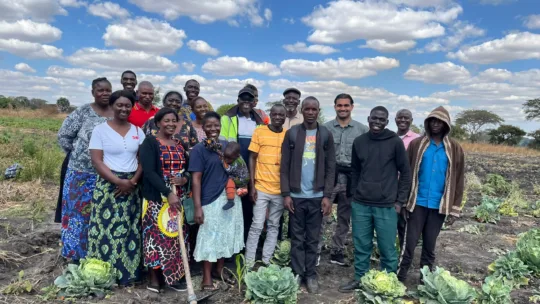
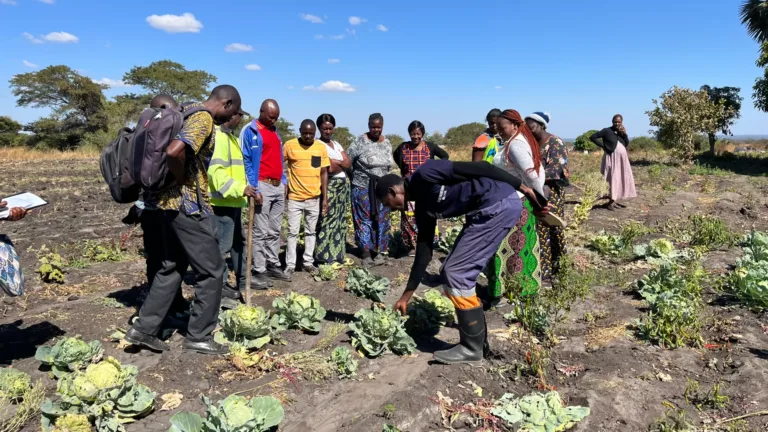
One morning in the Chilanga District, Jean-Pierre is right in the middle of the farmers' first practical training session in the field. Here they learn how to use fertilizer correctly, how to use lime to improve the soil and how to use mulch as a ground cover. They are also shown the correct way to deal with pests and diseases
In addition to practical experience, farmers also acquire business management skills: They learn how to keep records, compare income and expenditure and thus assess the profitability of farms.
An exchange at eye level
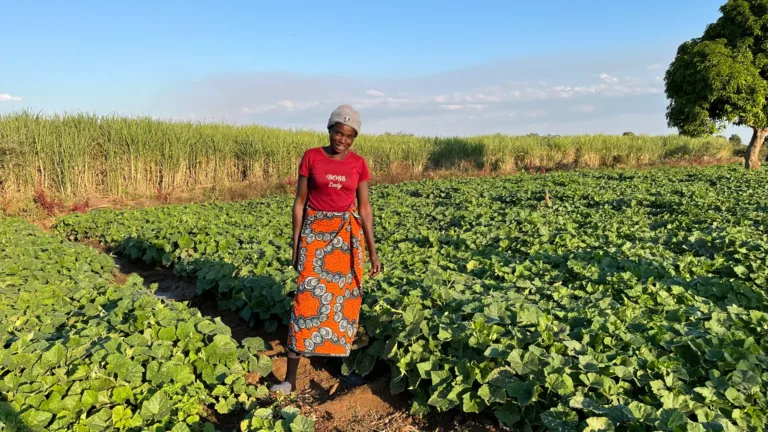
When talking about a project trip, many people initially think of figures, reports and monitoring. But on site, it quickly becomes clear that there is a story behind every figure. During his visit, Jean-Pierre met project participant Juliet Kabanga. This encounter shows what data alone cannot capture.
Juliet is a widow, looks after her children and grandchildren and runs her small farm at the same time. As she has many relatives to care for and her income alone is not enough, she has chosen farming as her livelihood.
The training courses have taught Juliet that diversity in the field pays off. From next month, she plans to grow watermelons, green peppers and butternuts in addition to pumpkins and Chinese cabbage. At the same time, she has learned about the business side of farming. Juliet sums up her long-term goal as follows:
"I want to open my own store where I can sell the fruit and vegetables produced on my farm."
A conclusion from up close
During a project trip, the program managers cann see with their own eyes what developmentcooperation actually achieves on the ground. Jean-Pierre's insights into the practical training of farmers and the meeting with Juliet Kabanga make it clear: Exchange and hands-on learning are the keyto strengthen families in the long term.